
ADVISOR TRAINING
OPENING SEQUENCE
OPENING CONVERSATION
Hello (Client),
Thanks for taking the time to speak with me about your business.
ASK THE QUESTION
Before we get started, I have a question. How valuable would it be if we could save you 40-60% in taxes?
EMOTIONAL HOOK (Go down three levels for emotion)
Why is that important to you? (FIND THE GOAL)
WHY (Repeat the goal)
WHY (Repeat the next level Goal)
WHY (Repeat the next level Goal)
(Watch Jeremy Minor - 7th Level Training)
CONNECT THE HOOK
If we could help you achieve (GOAL) by reducing your current taxes by 40-60%, how valuable would that be to you?
TAX MITIGATION
What are you currently doing to lower your taxable income by 40-60% now?
BUSINESS QUESTIONS
(Ask in a conversation, not bullet points)
Many of the tax strategies we use are based on how a business is structured and operates.
Let me ask you a few questions about your business
How are you structured? (LLC, S-Corp, C-Corp)
How many Employees do you have?
What was your revenue last year?
How much in taxes have you paid this last year?
FIND THE MONEY....
(You are looking to find liquid money for an Annuity / IUL)
Are you funding a company plan like a 401K or SEP IRA to offset your taxes?
(If Yes) Are you max-funding the plan?
(If Yes) Have you considered a ROTH Conversion strategy?
The concept works great when your fund is over $500,000.
If they have liquid money, you can offer a Retirement Analyzer plan, which can be a huge benefit to the client.

MAIN HOOKS
CPA SCRIPT
We believe that one person does not know everything. Would you agree? (YES)
CPAs often focus on compliance. They help you with filing your quarterlies, annual taxes (both personal and business), and perhaps even your accounting and payroll.
But when it comes to tax mitigation, this is often outside their scope of tax compliance. CPA's act more like a Primary care doctor rather than a tax specialist.
When was the last time your CPA took off their tax hat and put on their legal hat? (NEVER)
Some tax strategies require the business to be restructured correctly. This requires and Attorney, not a CPA.
Our tax mitigation team has CPA's, Tax Attorneys, Enrolled Agents, and financial advisors working together as a team to mitigate taxes.
SELLING YOUR BUSINESS
When do you plan to sell your business?
We show business owners how to:
Get the best valuation for your business
Use the QSBS $15 million business tax exemption
Avoid the 20% capital gains tax
If you got 20% more income and used that money in retirement, how valuable would that be for you and your family?
COMMERCIAL PROPERTY (Cost Segregation)
Do you own commercial or Residential properties?
How do you currently depreciate real estate?
CPA's will depreciate real estate
Commercial - 39 years
Residential - 27 years
If you could accelerate depreciation to offset your taxes today rather than years down the road, how valuable would that be for you?
BENEFITS OF ACCELERATION OF DEPRECIATION
Create more up-front cash flow
Lowering your taxes both now and in the future
Recapture past depreciation from the last few years.
RETIREMENT INCOME TAX FREE / LEVERAGE
In retirement, how are you planning to create your Tax-Free income?
If your business is over $10 Million in value, we often can show business owners how to leverage other people's money to fund their retirement income tax-free.
We often double or triple your income
How Valuable would that be?
VIDEO TRAINING FOR ABOVE SCRIPT
About our Website
Advisor Script Example
Industry Terms
EBITDA (Earnings Before Interest, Taxes, Depreciation, and Amortization)
is a financial metric used to measure a company's operating profitability and operational efficiency by excluding non-cash expenses, financing costs, and taxes. By adding back interest, taxes, depreciation, and amortization to a company's net income, EBITDA provides a clearer view of its core earnings potential, making it useful for comparing businesses within the same industry and assessing a company's ability to generate cash from its operations
Section 199A - QBI (Qualified Business Income)
The Qualified Business Income (QBI) deduction, or Section 199A, allows eligible owners of pass-through businesses to deduct up to 20% of their net business income on their taxes. This can significantly lower a taxpayer's effective tax rate and is available even if you take the standard deduction. (USE FORM 8995)
The deduction is available to owners of:
- Sole proprietorships
- Partnerships
- S-Corporations
- Some trusts and estates
The QBI deduction was made permanent by the One Big Beautiful Bill (OBBBA), removing the original expiration date of 2025.
What qualifies as QBI
To qualify, the income must be from a trade or business in the United States and meet the definition of "qualified business income". It generally includes net profit, but specifically excludes:
- W-2 wages
- Capital gains or losses
- Investment income (including certain dividends and interest)
- Guaranteed payments made to partners
- Income earned outside the United States
Section 1202 - QSBS (Qualified Small Business Stock)
Key requirements for QSBS
Direct acquisition:
The stock must be acquired directly from the issuing company at its "original issuance" in exchange for cash, property, or services.
Company asset limits:
At the time of issuance, the issuing corporation's aggregate gross assets must not have exceeded $50 million (or $75 million for stock issued after July 4, 2025).
Active business requirement:
For substantially all of the holding period, the issuing corporation must meet the "active business" requirements, with at least 80% of its assets being used in a qualified trade or business.
Holding period:
The stock must be held for more than five years to qualify for the full exclusion.
Exclusion limits and benefits
For stock issued before July 5, 2025:
The exclusion is the greater of $10 million or 10 times the taxpayer's adjusted basis in the stock.
For stock issued on or after July 5, 2025:
A tiered exclusion applies, based on the holding period: 3-4 years: 50% exclusion 4-5 years: 75% exclusion 5+ years: 100% exclusion
The exclusion cap is increased to the greater of $15 million or 10 times the taxpayer's adjusted basis in the stock.
Ineligible businesses
Certain businesses are ineligible, such as those in financial services, law, accounting, health, architecture, and natural resources.
BPT (Business Privilege Tax)
A business privilege tax is a tax imposed by a state or local government on businesses for the right to operate within its jurisdiction. These taxes help fund local public services and infrastructure, such as police and fire protection, road maintenance, and waste management.
How it works
The specifics of a business privilege tax vary by location and type of business, but the tax is generally calculated in one of several ways:
- Based on gross receipts: Some taxes are a percentage of the business's total revenue.
- Based on net income: The tax can be based on the business's profits.
- A flat fee: Some jurisdictions impose a set fee on all businesses or specific types of businesses.
BPT (Business Profits Tax)
A business profits tax is a state-level tax on a business's net income (profits) earned from activities within that state. Tax base: This tax is based on net income, which is a business's revenue after subtracting allowable expenses and deductions.
Section 162 (Executive Bonus)
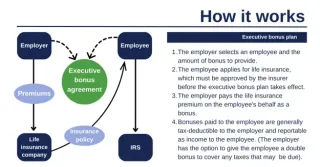
A Section 162 executive bonus plan allows a company to pay a tax-deductible bonus to an executive to fund a life insurance policy or annuity that the executive owns, providing them with a death benefit and a tax-deferred, accessible cash value over time.
For the company, the bonus is an "ordinary and necessary" expense and therefore a deduction, while the executive receives the policy benefit. These plans are simple, flexible, and effective for retaining and recruiting key employees by offering benefits not subject to Section 409A rules.
Benefits for the Company
- Retention and Recruitment: The bonus plan helps attract and keep valuable employees.
- Simplicity: Plans are straightforward to administer compared to other executive benefits.
- Cost-Effective: It's an affordable strategy for companies without extensive budgets for elaborate packages.
- Flexibility: The company can adjust or stop bonus payments in the future.
How it Works
1. Bonus Payment:
The company makes bonus payments to the executive.
2. Policy Ownership:
The executive uses the bonus money to purchase and personally own a life insurance policy or annuity.
3. Tax Treatment:
- Company: The bonus payment is a deductible business expense.
- Executive: The bonus is taxable income to the executive, who can also receive the policy's cash value tax-deferred and potentially tax-free.
4. Flexibility:
The executive can use the cash value later for retirement or other goals, often without penalty.
Benefits for the Executive
- Portability:
The executive owns the policy, making it a portable asset even if they change employers.
- Tax-Deferred Growth:
The cash value grows on a tax-deferred basis.
- Access to Funds:
The executive can access the cash value for personal needs, such as retirement income.
- No 59½ Penalty:
Distributions from the policy are not subject to the 10% penalty for distributions before age 59½.
Requirements for a business expense
An expense must satisfy six criteria to be deductible under Section 162(a):
- Ordinary: The expense is common and accepted in the taxpayer's specific trade or business.
- Necessary: The expense is appropriate and helpful for the business. It does not have to be indispensable.
- Expense: It must be an expense rather than a capital expenditure for an asset with a longer useful life.
- Paid or incurred: The payment must have been made during the taxable year.
- In carrying on: The expense must be related to an active trade or business, not a mere hobby.
- Trade or business: The activity must be engaged in for profit.
Common deductible expenses
- Advertising and marketing costs
- Salaries and wages paid to employees
- Insurance premiums for the business
- Professional fees, such as legal and accounting services
- Business travel expenses, including lodging and transportation
- Office rent, supplies, and utilities
- Certain taxes and license fees
Key limitations under Section 162
While Section 162 allows for broad deductions, other parts of the code add important limits and exceptions:
- Section 162(m) — Excessive executive compensation:
This provision limits the deduction for compensation paid by publicly held corporations to certain executives to no more than $1 million per year.
- Section 162(e) — Lobbying and political expenditures: Most expenses for lobbying or influencing legislation are not deductible.
- Section 162(f) — Fines and penalties: Fines and penalties paid to a government for violating a law are generally not deductible.
- Section 162(q) — Sexual harassment or abuse payments: This provision disallows deductions for payments related to sexual harassment or abuse that are subject to a nondisclosure agreement.
- Illegal payments: Bribes, kickbacks, and other illegal payments to government officials or others are not deductible.
Section 7702 (Life Insurance)
Section 7702 of the U.S. Internal Revenue Code defines what qualifies as a life insurance contract for federal tax purposes.
Established to prevent investment vehicles from receiving favorable tax treatment as life insurance, it provides two primary tests that a policy must pass to secure tax-advantaged status.
The two qualification tests
1. The Cash Value Accumulation Test (CVAT)
The CVAT is a prospective test requiring that the policy's cash surrender value never exceed the net single premium required to fund its future death benefits.
It ensures the policy maintains a sufficient "amount at risk," meaning the death benefit remains significantly higher than the policy's cash value, upholding its insurance purpose.
The test limits the cash value relative to the death benefit, which can result in more restrictive growth potential compared to the other test, especially over the long term.
2. The Guideline Premium and Corridor Test (GPT)
The GPT consists of two parts: a premium test and a cash value corridor test.
Guideline Premium Test: This part limits the total premiums paid into the policy. It states that the sum of premiums paid cannot exceed the "guideline premium limitation" at any time. This limitation is based on either a guideline single premium or the sum of guideline level premiums.
Cash Value Corridor Test: This part maintains a required gap, or "corridor," between the policy's death benefit and its cash value. As the insured ages, the death benefit must be a certain percentage higher than the cash surrender value. This ensures a sufficient amount of "at-risk" insurance is maintained relative to the accumulating cash value.
Section 179 (Equipment Deduction)
Section 179 of the IRS tax code allows businesses to deduct the full purchase price of qualifying equipment and software purchased or financed during the tax year, rather than depreciating the cost over several years.
The deduction is intended to incentivize businesses to invest in themselves.
Section 179 key details for 2025
Recent legislation, including the "One Big Beautiful Bill Act" (OBBBA), has made significant changes to the Section 179 deduction for 2025.
Maximum deduction: The maximum amount a business can deduct is $2.5 million for the 2025 tax year.
Spending cap: The deduction begins to phase out dollar-for-dollar once a business's total equipment purchases exceed $4 million.
Business income limit: The deduction is limited to the business's net taxable income. Any amount that exceeds this limit can be carried forward to future tax years.
Qualifying property
Most tangible, depreciable personal property purchased for business use qualifies. The asset must be used more than 50% for business purposes. Examples include:
- Machinery, tools, and equipment.
Computers and "off-the-shelf" computer software.
- Office furniture and equipment.
- Certain business vehicles.
- Qualified real property improvements, such as roofs, HVAC systems, fire protection, and security systems on nonresidential buildings.
Non-qualifying property
Some property is specifically excluded from Section 179 deductions:
- Land and land improvements.
- Inventory.
- Office supplies.
- Assets purchased from a related party.
Section 179 versus bonus depreciation
Section 179 and bonus depreciation both offer immediate expensing for business property, but they have some notable differences
Additional Terms
TERMS AND CONDITIONS
· SALT – State and Local Tax
· PTET stands for Pass-Through Entity Tax
- Capped at $10,000
QBI – Qualified Business Income
Partnership – After expenses, the remaining income is paid out as an individual w/FICA
NIIT - Net Investment Income Tax
Frequently Asked Questions
Why are you finding Tax Savings my CPA has not?
We often find that CPAs focus on Compliance and not on Tax Mitigation Strategies. It's like asking your primary care doctor to be your cardiologist.
A Tax Mitigation team will consist of both Tax, Legal, and Financial advisors who are working together to achieve the maximum results.
Can you work with my CPA on Tax Strategies?
Yes, we will educate your CPA with Advanced Tax Mitigation Strategies that we would use to mitigate your taxes 40-80%.
Our team has Tax, Legal, and Financial advisors designing the strategies as a team approach.
What are your cost for working with my company?
This depends upon the services you have requested. Our Strategy meetings are no cost, but the implementation may carry a cost depending upon the services involved.
The goal of Tax mitigation is to save you 40-80% of the taxes you would pay the IRS, and worth the fees involved to mitigate.
We strive to offer you the tax planning you deserve!
Business Tax Mitigation (Corporate Offices)
(817) 717-1487
DISCLAIMER
All details found on our website, contained in our emails, and any text messages are for educational purposes only. For legal or tax advice, please consult an attorney or tax professional.
Are you a Registered CPA? Learn More
Are you an Advisor looking to partner with us? Learn More
We Support the rescue of kids out of sex trafficking Learn More
If you are a Church, Charity, Ministry, visit Kingdom Planners
© Business Tax Mitigation 2026