
Contact Us
Tax Document Examples
Tax Return: Your most recent Personal and Business tax return, depending upon your corporate structure.
PFS Statement: A Personal Financial Statement is supplied by the business owner or prepared by a CPA.
P&L Statement: The Profit and Loss Statement can be obtained from your accountants, bookkeepers, or accounting software.
Tax Returns
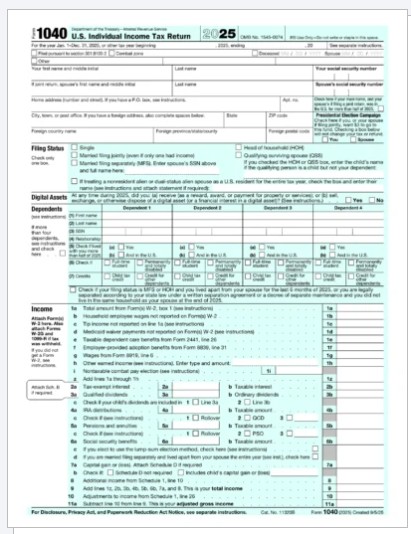
Business tax returns include a variety of forms based on business structure.
Personal and Business Tax Return includes:
1040
Sole Proprietorship (1040 and Schedule C)
Partnerships (Form 1065 & Schedule K-1)
S-Corps (Form 1120-S and Schedule K-1)
C- Corps (Form 1120)
Common Supporting forms:
Income Reporting
Form 4565 - Depreciation
Form 8829 - Expenses for Business use of your home (Sole Proprietor)
Schedule SE (Self-Employment Tax)
Form 1040-ES (Estimated Tax for Individuals)
W-2 / W-3 Wage and tax statement
Form 1099-NEC (Independent Contractors)
Form 940 (Federal Unemployment Tax Return)
Form 7004 (Application for extension)
Form 1099-K (Third-Party Networks)
Form 3115 (Change in accounting)
This list is just a sample of possible forms we may request, depending upon your company structure and method of operating.
Personal Financial Statement
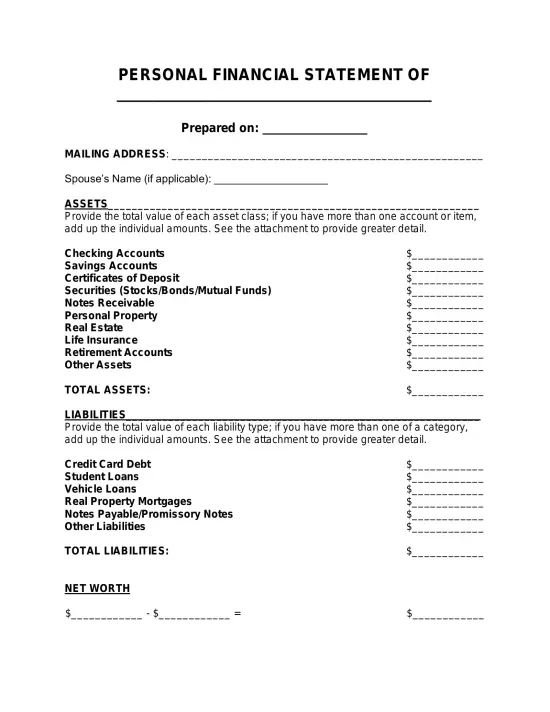
Personal Financial Statement includes:
Assets (What You Own): Listed by liquidity (highest to lowest).
Cash: Checking and savings accounts, money market funds.
Investments: Stocks, bonds, mutual funds, and retirement accounts (401k, IRA).
Real Estate: Fair market value of primary residence and other properties.
Personal Property: Automobiles, jewelry, art, and valuable collectibles.
Other: Cash surrender value of life insurance, business interests, and notes receivable.
Liabilities (What You Owe):
Real Estate Mortgages: On primary and other properties.
Loans: Car loans, student loans, personal loans, and business loans guaranteed personally.
Debt: Unpaid credit card balances and revolving lines of credit.
Taxes: Unpaid taxes and estimated taxes on potential sale of assets.
Net Worth: The final calculation is, determined by subtracting total liabilities from total assets.
Additional Information: Often includes annual income and, in some cases, a statement of changes in net worth.
Context: These are often required by banks for loan applications or to assess personal guarantees.
Valuation: Assets should be listed at their current estimated fair market value, not their original cost.
Profit and Loss Statement
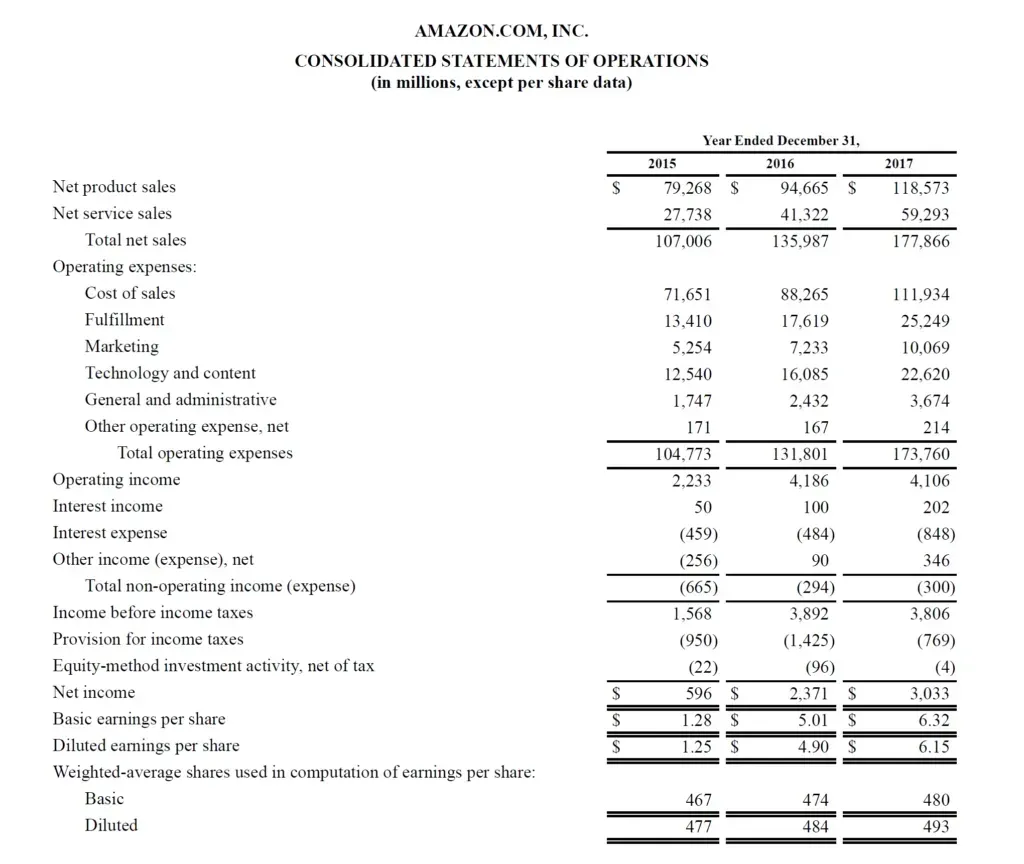
A company’s statement of profit and loss is portrayed over a period of time, typically a month, quarter, or fiscal year.
Profit and Loss Statement often includes:
Revenue (or Sales)
Cost of Goods Sold (or Cost of Sales)
Selling, General & Administrative (SG&A)
Expenses
Marketing and Advertising
Technology/Research & Development
Interest Expense
Taxes
Net Income
Frequently Asked Questions
Why are you finding Tax Savings my CPA has not?
We often find that CPAs focus on Compliance and not on Tax Mitigation Strategies. It's like asking your primary care doctor to be your cardiologist.
A Tax Mitigation team will consist of both Tax, Legal, and Financial advisors who are working together to achieve the maximum results.
Can you work with my CPA on Tax Strategies?
Yes, we will educate your CPA with Advanced Tax Mitigation Strategies that we would use to mitigate your taxes 40-80%.
Our team has Tax, Legal, and Financial advisors designing the strategies as a team approach.
What are your cost for working with my company?
This depends upon the services you have requested. Our Strategy meetings are no cost, but the implementation may carry a cost depending upon the services involved.
The goal of Tax mitigation is to save you 40-80% of the taxes you would pay the IRS, and worth the fees involved to mitigate.

We strive to offer you the tax planning you deserve!
Business Tax Mitigation (Corporate Offices)
(817) 717-1487
DISCLAIMER
All details found on our website, contained in our emails, and any text messages are for educational purposes only. For legal or tax advice, please consult an attorney or tax professional.
Are you a Registered CPA? Learn More
Are you an Advisor looking to partner with us? Learn More
We Support the rescue of kids out of sex trafficking Learn More
If you are a Church, Charity, Ministry, visit Kingdom Planners
© Business Tax Mitigation 2026